August 31, 2026
Dear Readers,
I recently received a newsletter from Hay House that really got me thinking.
The newsletter was about the word “should.” Read Tracy writes here about Louise Hay, the founder of Hay House:
“Louise believed ‘should’ was one of the most damaging words in the English language because it almost always makes someone wrong—usually ourselves.
I should be further along by now. I should exercise more. I should have handled that better. I should have figured this out already.
We may think we’re motivating ourselves when we say these things, but most of the time, we’re really just reminding ourselves of all the ways we think we haven’t measured up.
And I think most of us are pretty good at doing that already.
Louise suggested replacing “should” with “could.” I’ve always liked that because it’s such a small change, but it completely changes the way the thought feels.
“I should exercise more” becomes “I could take a walk today.” Instead of criticizing yourself for what you haven’t done, you’re giving yourself a choice about what you can do next.”
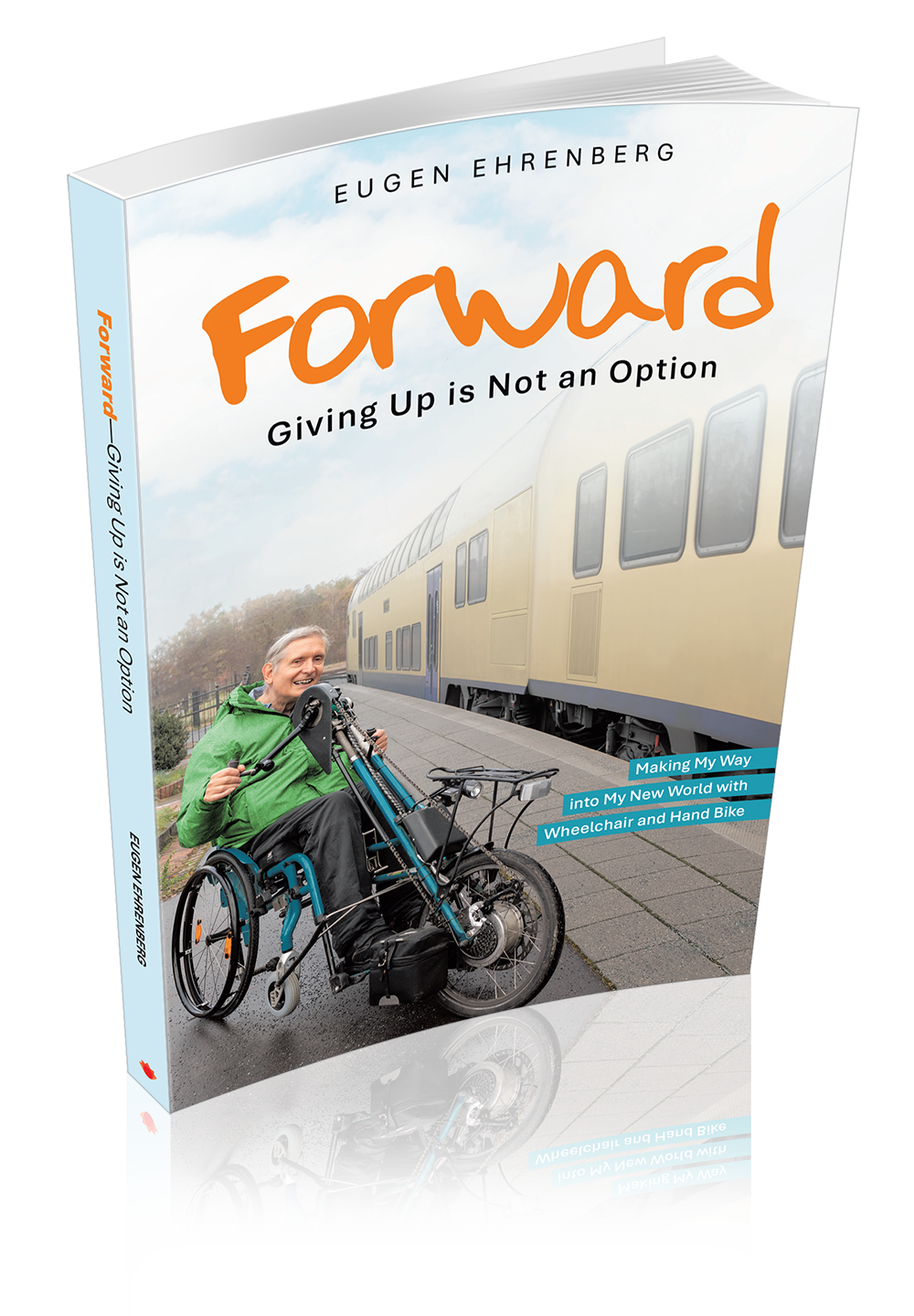
This reminded me of my book: Forward—Giving Up Is Not an Option and the chapter
“My Rise Out of the Deep Valley” .
In it, I write about a very similar topic using the word “try.” In my opinion, this word should be banished from our language.
“My old pattern of first having a lot of doubts and reservations still haunted me. Why couldn’t I simply say, ‘I’ll give it a try and see what happens’? Even better would have been to say, ‘I will do it and see what happens!’” The word try has a multifaceted meaning. In scientific research, a trial is certainly very useful for finding confirmation of something. In everyday speech, when we say we’ll try something, it usually doesn’t imply that we want to find out what the result will be. When someone says, “I’m trying to be on time,” they’re actually implying that it won’t happen or that they probably won’t do it. It would be more honest to say directly, “I certainly won’t be on time.” (Page 28)
Ever since this became really clear to me, I very rarely say that I’m “trying” to do something. My tendency now is more to just do something and see if it helps me. That’s a much better approach, since it rules out any initial doubt. I do it and see what happens. This can turn out positively or negatively—and that’s just how it is. In any case, I’ve gained an experience I can build on.
I’d be delighted, dear reader, if you’d like to learn more about this in my book, which is available everywhere.
I sincerely wish you all a wonderful time, as well as continued courage and confidence in these turbulent times.
Warm regards
Eugen
Interesting Thoughts on “Should” and “Try”
Leave a Comment
Posted: August 31, 2026 by Eugen Ehrenberg
August 31, 2026
Dear Readers,
I recently received a newsletter from Hay House that really got me thinking.
The newsletter was about the word “should.” Read Tracy writes here about Louise Hay, the founder of Hay House:
“Louise believed ‘should’ was one of the most damaging words in the English language because it almost always makes someone wrong—usually ourselves.
I should be further along by now. I should exercise more. I should have handled that better. I should have figured this out already.
We may think we’re motivating ourselves when we say these things, but most of the time, we’re really just reminding ourselves of all the ways we think we haven’t measured up.
And I think most of us are pretty good at doing that already.
Louise suggested replacing “should” with “could.” I’ve always liked that because it’s such a small change, but it completely changes the way the thought feels.
“I should exercise more” becomes “I could take a walk today.” Instead of criticizing yourself for what you haven’t done, you’re giving yourself a choice about what you can do next.”
This reminded me of my book: Forward—Giving Up Is Not an Option and the chapter
“My Rise Out of the Deep Valley” .
In it, I write about a very similar topic using the word “try.” In my opinion, this word should be banished from our language.
“My old pattern of first having a lot of doubts and reservations still haunted me. Why couldn’t I simply say, ‘I’ll give it a try and see what happens’? Even better would have been to say, ‘I will do it and see what happens!’” The word try has a multifaceted meaning. In scientific research, a trial is certainly very useful for finding confirmation of something. In everyday speech, when we say we’ll try something, it usually doesn’t imply that we want to find out what the result will be. When someone says, “I’m trying to be on time,” they’re actually implying that it won’t happen or that they probably won’t do it. It would be more honest to say directly, “I certainly won’t be on time.” (Page 28)
Ever since this became really clear to me, I very rarely say that I’m “trying” to do something. My tendency now is more to just do something and see if it helps me. That’s a much better approach, since it rules out any initial doubt. I do it and see what happens. This can turn out positively or negatively—and that’s just how it is. In any case, I’ve gained an experience I can build on.
I’d be delighted, dear reader, if you’d like to learn more about this in my book, which is available everywhere.
I sincerely wish you all a wonderful time, as well as continued courage and confidence in these turbulent times.
Warm regards
Eugen
Category: Blog